



Your cart is empty Continue Shopping
Tour info
TOUR CODE
SG2
Language
Destination
Physicality
3/10
Duration
1/2 day
Tour Type
Pace
Leisurely
Group Size
Private
Overview
Sixty kilometres northwest of Ho Chi Minh City, beneath rice paddies and rubber plantations that look like ordinary countryside, lies a hidden world: over 200 kilometres of hand-dug tunnels where an entire community once lived, breathed, and resisted — out of sight, for decades. This half-day Cu Chi Tunnels tour trades the city’s motorbike hum for red earth and dense undergrowth, where every camouflaged trapdoor and false air vent has a story to tell.
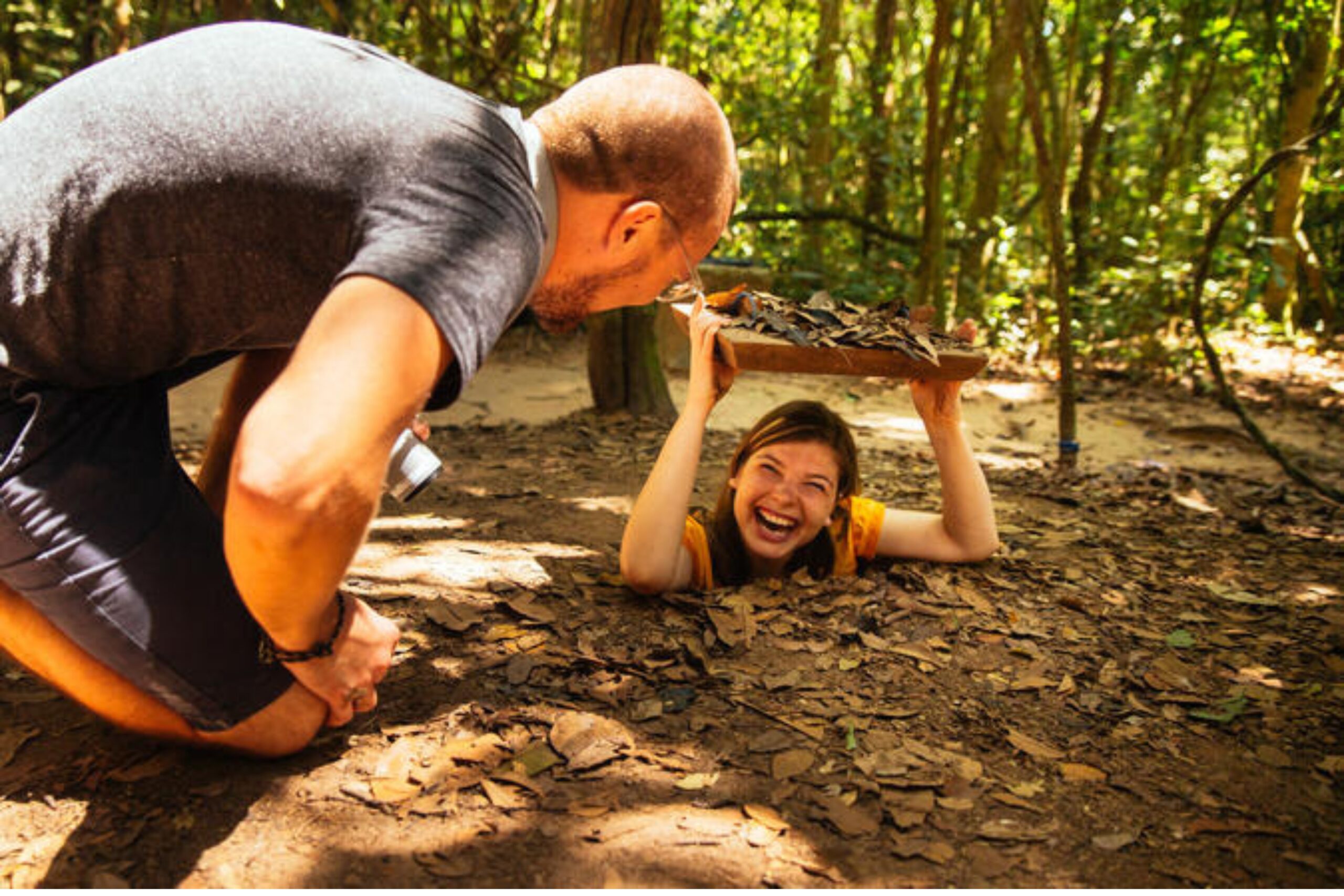
Dug by hand starting in the late 1940s and expanded through years of conflict, the network once stretched all the way to the Cambodian border, a multi-level maze of living quarters, field hospitals, kitchens, and command posts, some reaching ten metres underground. Above, the land bore the scars of bombing and defoliation; below, life carried on in near-total darkness, sustained by ingenuity as much as resolve. Air holes were disguised as termite mounds. Smoke from cooking fires was channelled and dispersed far from its source. Entrances vanished into the forest floor, invisible to anyone who didn’t know where to look.
What remains today is equal parts memorial and puzzle: a chance to crouch through the same red clay passages, see how an entire world was built to disappear, and understand a side of Vietnam’s history that’s felt more than read.
Itinerary
Pick-up: 8:00AM / 13:00PM | Drop-off: ~13:00PM / ~18:00PM
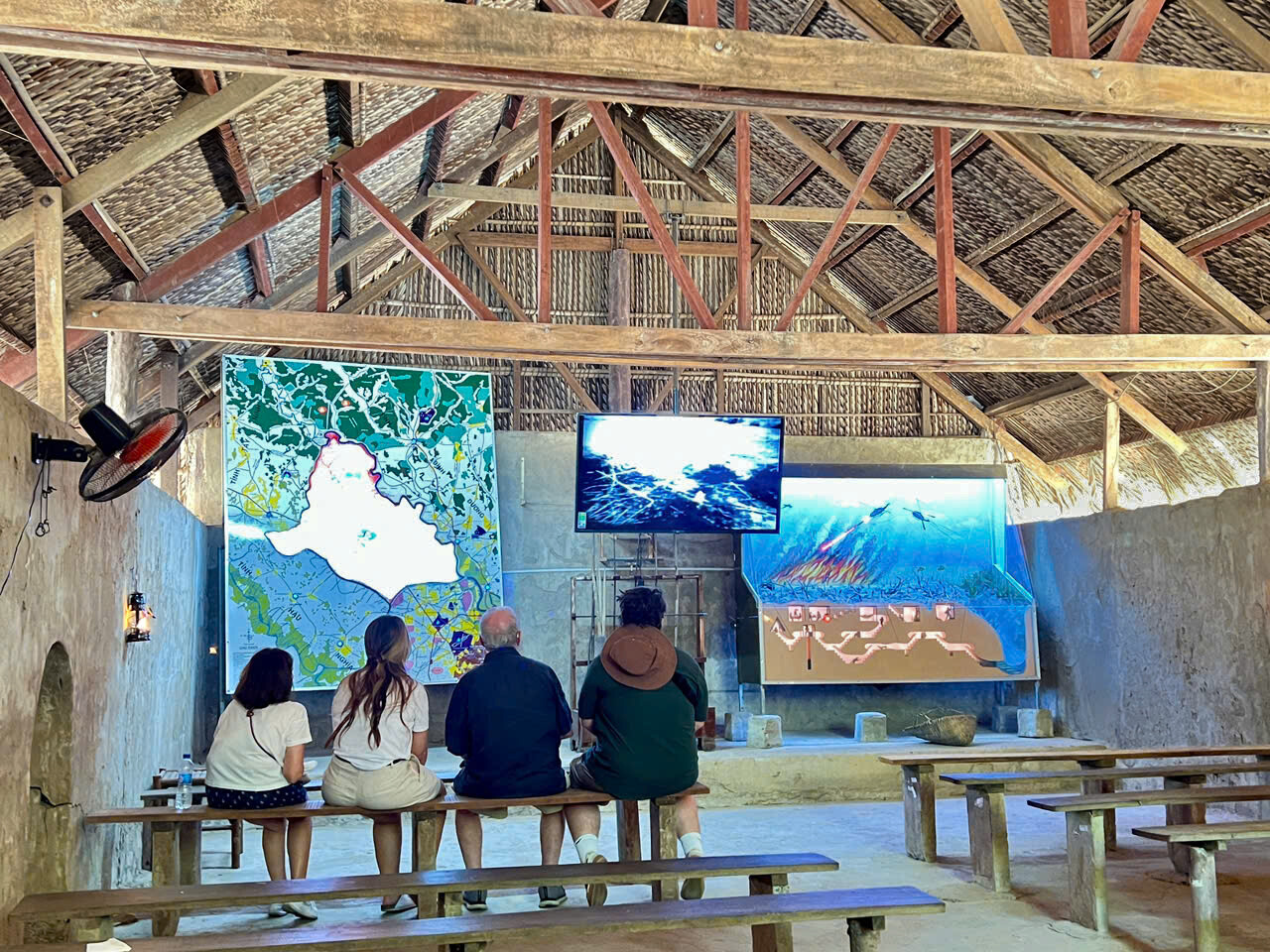
The road out of Ho Chi Minh City softens quickly into open countryside, palm groves, flooded fields, the occasional water buffalo grazing in the shade. After roughly ninety minutes, a short documentary sets the scene, tracing how Cu Chi’s farmland was transformed into one of the most ingenious underground networks in modern history.
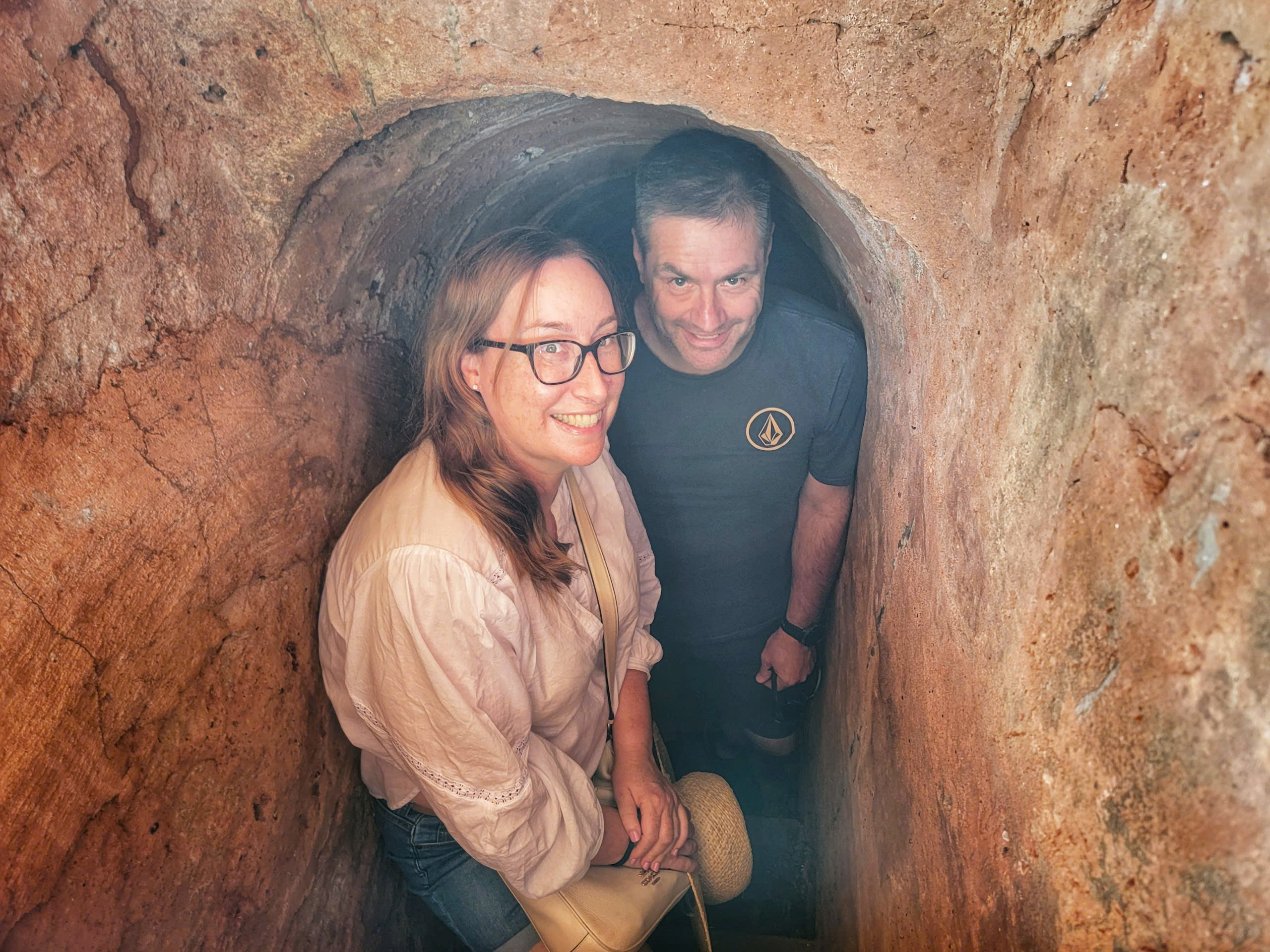
Step into the Ben Dinh section of the tunnels and walk the same ground where smoke-diverting kitchens, disguised entrances, and booby-trapped passages once kept a whole community hidden in plain sight. For the adventurous, the original tunnels are still open to crawl through narrow, dark, and humbling, while nearby, the sharp crack of AK47 and M16 rifles at the shooting range offers a visceral, optional echo of the past.
Before heading back, pause for a quiet ritual: boiled tapioca and hot tea, the same humble meal that once sustained those who lived below ground, simple, grounding, and unexpectedly moving.
Ideal for history lovers and anyone who wants to understand Vietnam’s wartime past beyond the textbook.
Included
| Excluded
|
Gallery


FAQ
Is the Cu Chi Tunnels tour suitable if I'm claustrophobic?
Yes. Walking through the historical site itself involves no tight spaces. Only the optional tunnel-crawling section requires entering the narrow original tunnels — and even then, shorter, widened sections are available for visitors who’d rather skip the snugger originals.
How long do we actually spend underground?
Most of the visit takes place above ground, walking the forested site and learning about the tunnel network’s history. Time spent actually crawling underground is entirely optional and usually just a few minutes.
Is the shooting range included in the tour price?
No, the shooting range is optional and paid on-site. It’s a popular add-on, but entirely up to you on the day.
What should I wear for this tour?
Light, breathable clothing and closed shoes are recommended — the site is forested with uneven, sometimes muddy ground. A hat and sunscreen are also worth packing, as much of the walk is outdoors.
Is this tour suitable for children?
It’s best suited to families with teens, given the historical and sometimes confronting wartime content. Younger children are welcome but may find the documentary and exhibits less engaging.
Should I choose the morning or afternoon departure?
Both run the same itinerary. The morning slot avoids the midday heat and tends to be quieter, while the afternoon works well if you have a late flight or morning commitment in Ho Chi Minh City.