


Your cart is empty Continue Shopping
The Soul of Hanoi: 3 Iconic Dishes That Define the Capital
In Hanoi, food is not merely sustenance; it is a repository of history. To eat in the capital is to engage in a thousand-year-old conversation between tradition, colonial influence, and local resilience. If you’re wondering what to eat in Hanoi, the answer goes far beyond a simple list of dishes.
While the city’s sidewalks offer an endless array of flavors, three dishes stand as the pillars of Hanoian identity: Pho, Bun Cha, and Cha Ca La Vong. For the discerning traveler, understanding these dishes requires looking beyond the bowl and into the culture that created them.
Who This Guide Is For
This guide is curated for culinary enthusiasts and history buffs who seek a deep, expert-level understanding of Hanoi’s gastronomic heritage. It focuses on the “ritual” of eating—the specific ways these dishes are prepared and consumed by those who call this city home. To truly understand iconic foods must-try in Hanoi, you need to start with three defining dishes.
What to Eat in Hanoi: 3 Dishes That Define the Capital
1. Pho: The National Soul in a Bowl
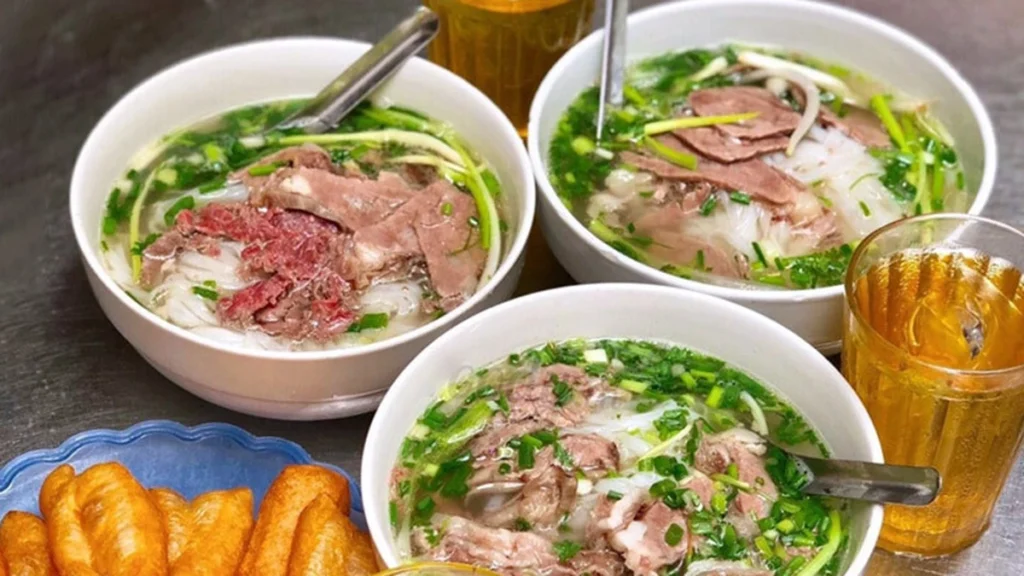
While Pho – one of the most famous food in Hanoi is now a global ambassador for Vietnam, its spiritual home remains the narrow streets of Hanoi.
- The History: Originating in the early 20th century in the Nam Dinh/Hanoi region, Pho is a fascinating example of cultural fusion. Historians believe it evolved when local vendors began using beef bones (introduced by the French) to enrich traditional buffalo-meat noodle soups.
- The Hanoian Way: Unlike the sweeter, herb-heavy versions found in the South, Pho Hanoi is characterized by its clarity and subtlety. The broth is the star, simmered for 8 to 14 hours with charred ginger, cinnamon, and star anise to achieve a transparent, umami-rich depth.
- The Ritual: High-end Hanoians often have a “favorite” vendor where the broth’s recipe has remained unchanged for generations. It is traditionally a breakfast dish, enjoyed in the quiet, misty hours of the morning when the broth is at its freshest.
Ginkgo’s Choice:
Phở 10 Lý Quốc Sư
📍 Location: 10 Ly Quoc Su Street, Hoan Kiem District.
The Experience: This is the gold standard for a professionally run, standalone local Pho shop. Earning recognition from the Michelin Guide (Bib Gourmand), it maintains an authentic energy but invests heavily in a clean environment, air conditioning, and swift service.
Ginkgo’s Insider Tip: Because of its fame, the restaurant is often busy, and you may need to wait in line. However, the wait is absolutely worth it for a pristine bowl of traditional beef Pho in a comfortable setting.
Phở Thìn Lò Đúc
📍 Location: 13 Lo Duc Street, Hai Ba Trung District.
The Experience: A complete departure from the clear-broth tradition, Pho Thin is famous for its “stir-fried beef” technique. The meat is quickly flash-fried with garlic on high heat before being added to the bowl, creating a rich, fatty, and deeply smoky broth packed with green onions.
Ginkgo’s Insider Tip: We do not recommend visiting in the morning, as it gets incredibly crowded, loud, and hot. Instead, plan your visit after 7:00 PM. The evening air is cooler, the crowds thin out, and you can enjoy this unique, intensely flavorful bowl in peace.
2. Bun Cha: The Midday Smoke of the Old Quarter
If Pho is the morning’s meditation, Bun Cha is the midday pulse of the city. As noon approaches, the scent of charcoal-grilled pork begins to waft through the Old Quarter—a signal that it is time for the capital’s favorite lunch.
- The History: First documented in the mid-20th century, Bun Cha is quintessential Hanoi. It gained international fame when President Barack Obama and Anthony Bourdain shared a meal at a local shop, but its local roots go much deeper.
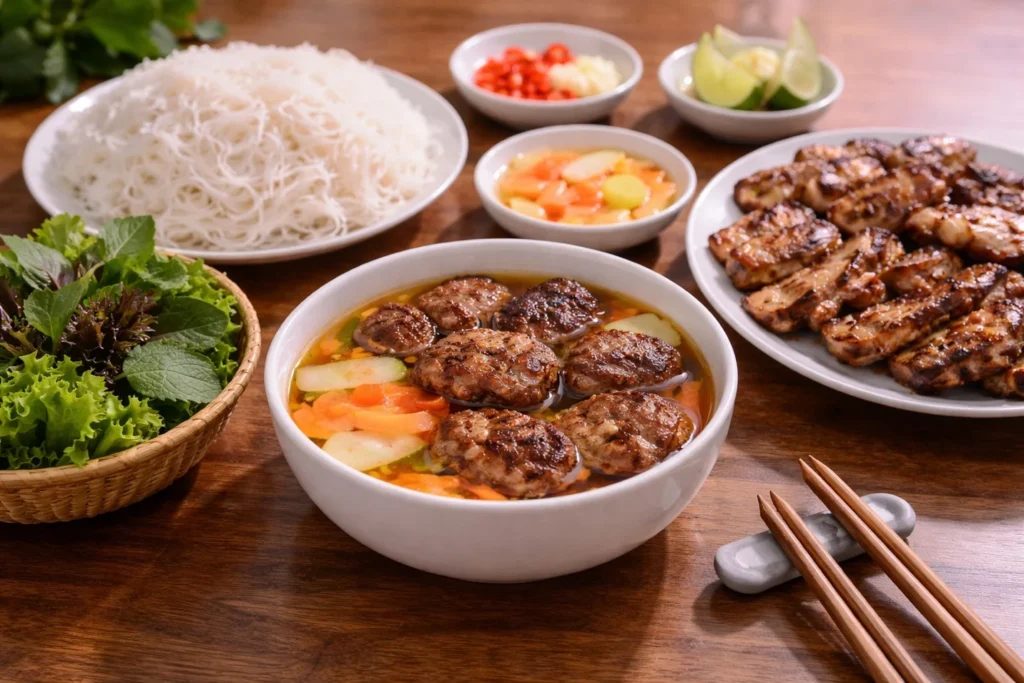
- The Flavor Profile: The dish is a masterclass in balance. Smoky, caramelized pork (both patties and belly) is submerged in a warm, light dipping sauce made of fish sauce, vinegar, and sugar. People usually eat bun cha with lots of fresh herbs and cold rice vermicelli (bun).
- The Ritual: The art of Bun Cha lies in the assembly. A discerning diner adds a touch of minced garlic and chili to the sauce, then dips small portions of noodles and herbs into the bowl, ensuring every bite is a perfect harmony of hot meat and refreshing greens.
Ginkgo’s Choice: Bún Chả Ta
📍Location: 21 Nguyen Huu Huan Street, Hoan Kiem District.
Why we love it: A Michelin Bib Gourmand recipient, Bún Chả Ta captures the authentic soul of Hanoi street food in a beautifully designed, multi-story space. With its bamboo decor, air-conditioned comfort, and impeccable hygiene standards, it offers the perfect midday retreat for those who seek authenticity without the compromise of a crowded sidewalk.
3. Cha Ca La Vong: A Legacy of Resistance
Cha Ca La Vong is more than a dish; it is a historical landmark. It is the only dish in the city so significant that it has an entire street named after it (Pho Cha Ca).
- The History: Created in the 1870s by the Doan family at 14 Hang Son Street, the dish was originally served to Vietnamese patriots during the French colonial era. The name “La Vong” refers to a statue of a legendary strategist who waited patiently for the right time to act—a subtle symbol of the resistance movement.
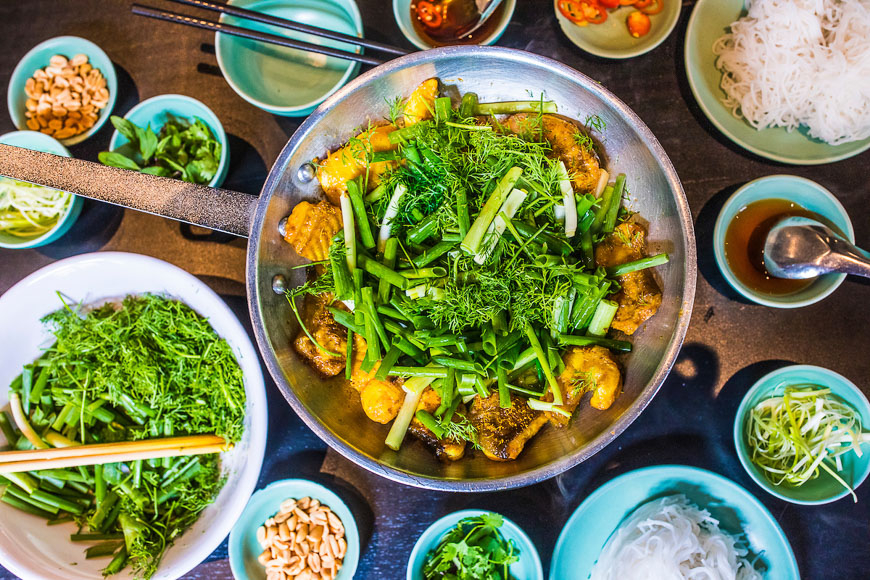
- The Craftsmanship: This is not street food. It is a refined, interactive experience. Chefs marinate slabs of Hemibagrus in turmeric and galangal, then grill over charcoal before being brought to the table.
- The Ritual: This is not your typical grab-and-go street food; it is a sit-down, interactive experience. The “culinary ritual” happens at your table. The staff places a skillet of sizzling fish over a small burner, and fresh dill and scallions are tossed in until they wilt into the aromatic oil. You then assemble your bowl with vermicelli, roasted peanuts, and—for the truly adventurous—a drop of pungent mam tom (fermented shrimp paste).
Ginkgo’s Choice: Chả Cá Thăng Long
📍 Location: 6B Duong Thanh Street, Hoan Kiem District.
Why we love it: Located in a grand, pale-yellow colonial townhouse, this Michelin-recognized restaurant offers an elegant atmosphere for this historic dish. The service is professional and the ingredients—from the turmeric-infused fish to the pungent mam tom (shrimp paste)—are of the highest quality. It is the definitive venue for experiencing Hanoi’s high-end culinary theater.
Authenticity vs. Refinement: Making the Choice
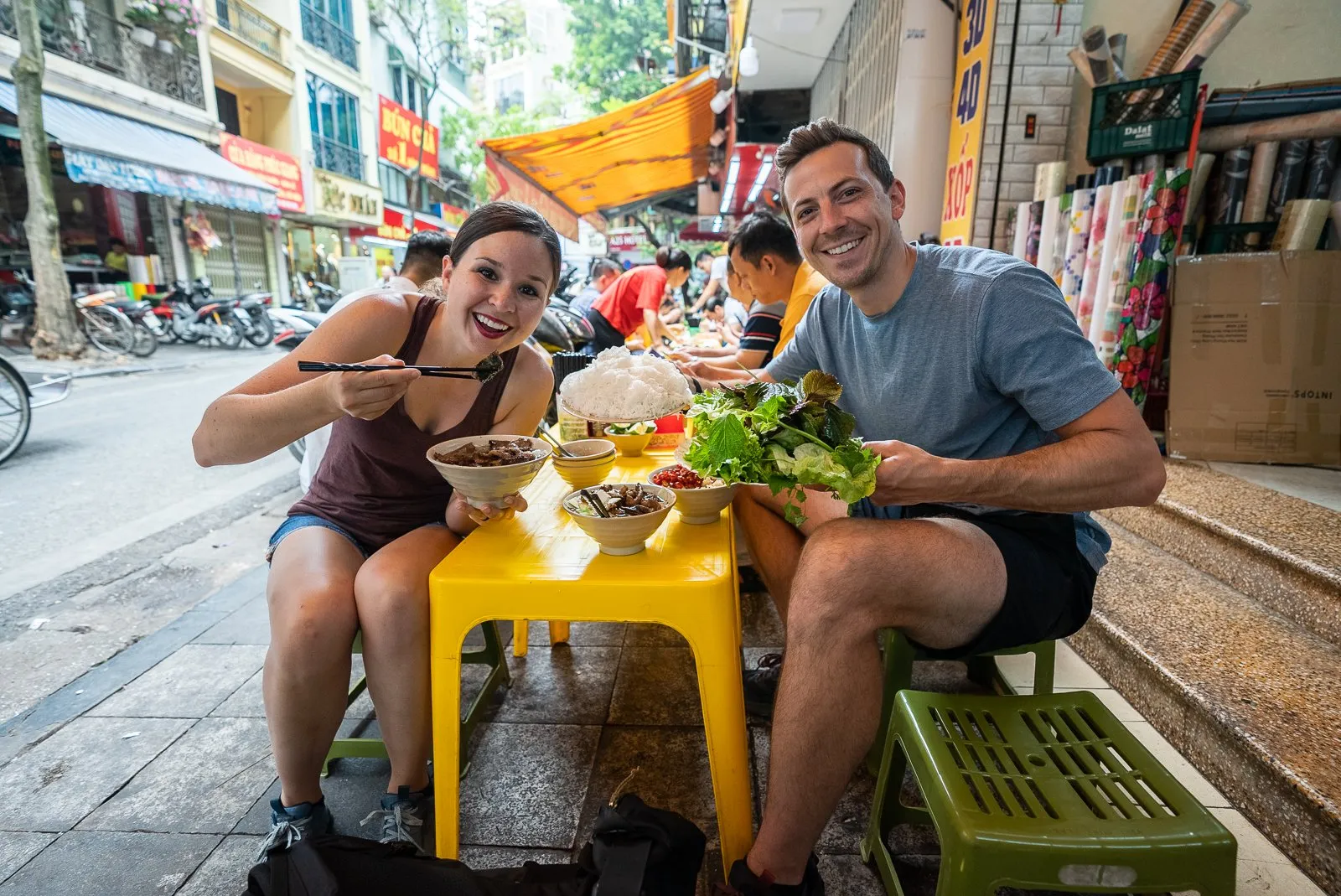
A common concern for travelers is whether they must sit on a sidewalk to experience “real” Hanoian food.
Our Insight: While the “plastic stool” experience is iconic, it is not the only way. Many of Hanoi’s finest restaurants specialize in preserving these traditional recipes within more comfortable, climate-controlled environments. These venues often use premium cuts of meat and higher-quality organic herbs, providing a refined version of the classics without losing their historical soul.
To see how these flavors fit into a wider exploration of the capital’s architecture and lifestyle, visit our Hanoi Travel Guide.
After you've chosen the best foods to eat in Hanoi, to plan the smoothest trip to Northern Vietnam, don't forget to consider Safety & Transport in Hanoi - one of the most chaos city of Vietnam
Check our relevant tours
Below are our curated tours, which start from Hanoi if you prefer a completely “hands-off” experience
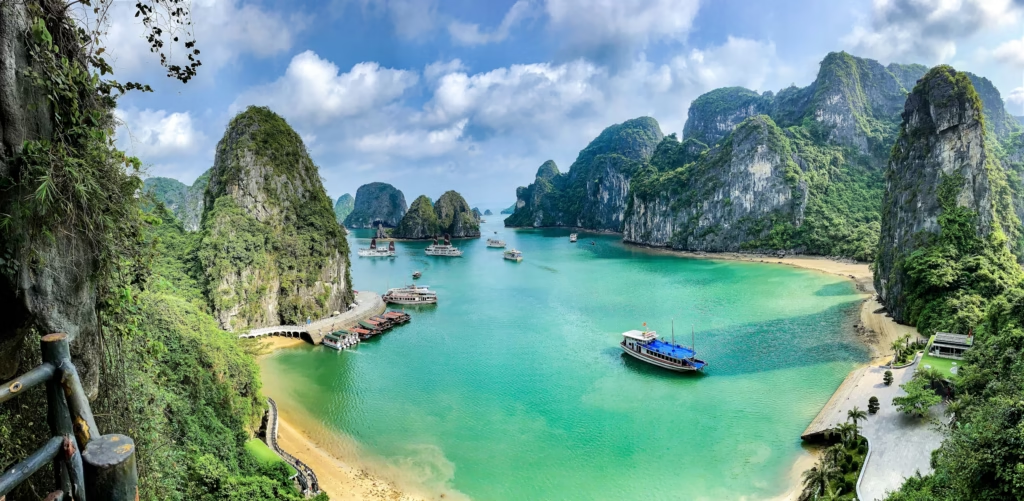
Essence of Vietnam
14-day journey start from Hanoi, beyond the South and takes you through the country’s most iconic destinations

Picturesque Vietnam
18-day journey through the country’s most naturally beautiful and culturally rich regions — for who want to see the landscapes, meet the people, and feel the magic that lives between the guidebook pages.

Hanoi, Pu Luong & Halong Bay
8-day journey start from Hanoi to the Northern Trails and beyond Halong Bay
Want a True Sense of Services? Let us help you customize your Vietnam Journey