

Vietnam 10 days itinerary: The Route That Works for First-Time Visitors
Planning a 10-day Vietnam tour for the first time? Here’s exactly what to expect — the route, the pace, and whether it’s actually enough time.
A Vietnam 10 days itinerary sounds like a lot, until you open a map of Vietnam. The country stretches 1,650 kilometres from North to South. The landscape changes completely every few hundred kilometres, from the karst highlands of the North to the ancient towns of the central coast to the flat river deltas of the South. Ten days, planned well, is enough to cover all three regions without feeling rushed. This guide shows you exactly how.
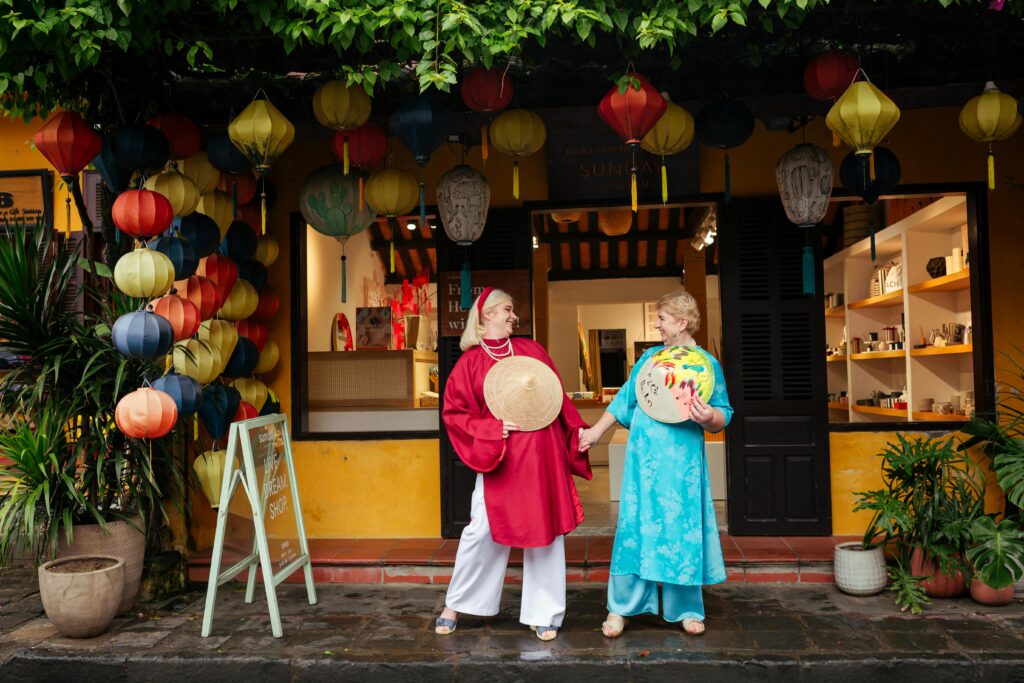
The Classic 10-Day Vietnam Itinerary (Ho Chi Minh City to Hanoi)
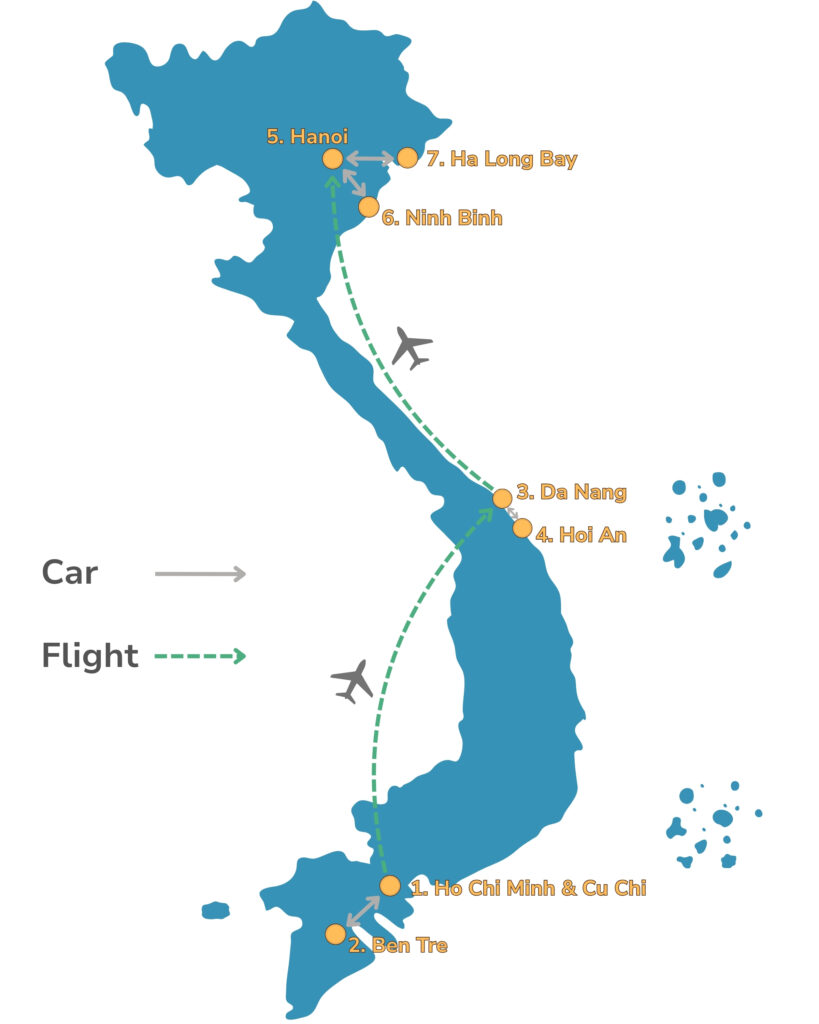
This route runs South to North: fly into Ho Chi Minh City, move through the South and Central regions, and depart from Hanoi. It covers all three of Vietnam’s distinct regions without feeling like a race.
Here’s how it breaks down.
Day 1: Ho Chi Minh City, Arrive & First Impressions
Ho Chi Minh City, still called Saigon by most people who live here, hits differently from the moment you land. The traffic is relentless, the energy is infectious, and the food is everywhere.
After settling in, the best introduction to the city isn’t a museum or a landmark. It’s a Vespa tour through the back streets after dark. Weaving through lit-up alleys, stopping at street food stalls that only locals know, watching the city come alive at night. This is the kind of first evening that sets the tone for the whole trip.
Day 2: Mekong Delta
Leave the city behind and spend a full day in Ben Tre, the heart of the Mekong Delta. The contrast is immediate: from urban chaos to palm-fringed canals, the silence broken only by the sound of a sampan moving through the water.
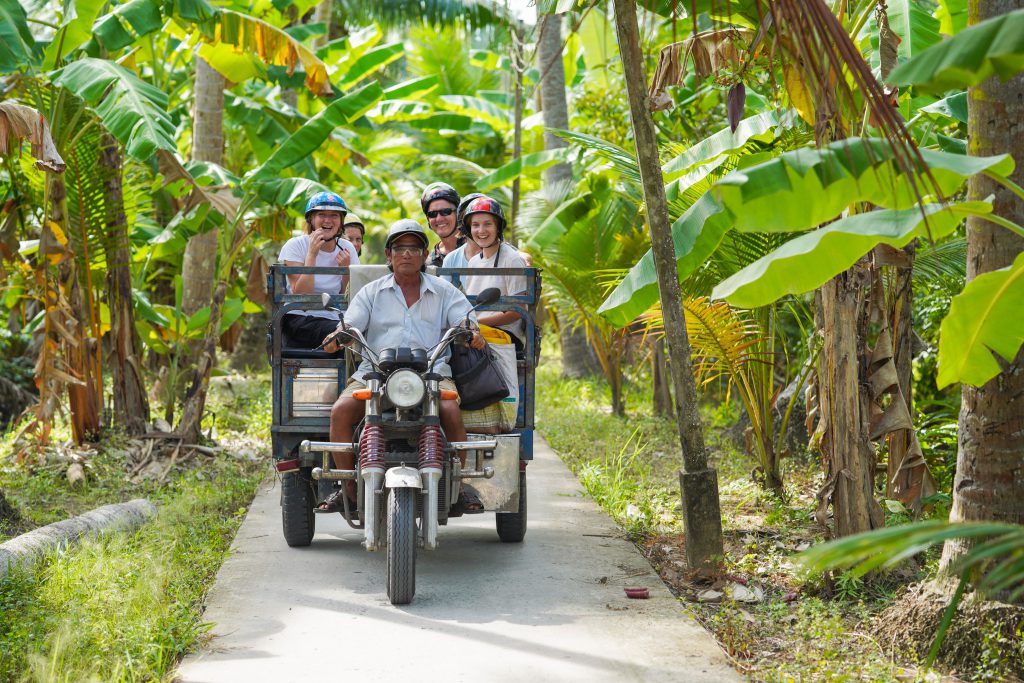
The day moves between boat rides, family-run workshops, coconut candy making, mat weaving, brick kilns and a home-cooked lunch at a riverside garden. A xe lôi (motorized cart) ride through village lanes in the afternoon slows things down further. This is a different Vietnam from the city, and one of the more quietly memorable days of the trip.
Day 3: Cu Chi Tunnels & Saigon Sights, Fly to Hoi An
Morning: Cu Chi Tunnels, 70 kilometres Northwest of the city. The tunnel network, built by hand during the Vietnam War and stretching 250 kilometres underground, is one of those places that changes how you think about the conflict. Hidden trapdoors, underground kitchens, narrow corridors used for shelter and supply routes. It’s sobering, fascinating, and worth the early start.
Back in the city for lunch, then a sweep through Ho Chi Minh City’s colonial history: Notre-Dame Cathedral, the grand Central Post Office, and the Reunification Palace, where tanks rolled through the gates in 1975 and the war ended.
Late afternoon: fly to Da Nang, transfer to Hoi An for the night.


Day 4: Hoi An, Villages, River & the Ancient Town
A full day in and around Hoi An, built around cycling and river life rather than the Ancient Town itself. You’ll have time for that later.
The day begins with a ferry across the Thu Bon River to Kim Bong Carpentry Village, where artisans have been carving wood for temples and building fishing boats for generations. Techniques that haven’t changed in centuries, workshops you can walk through, craftspeople who are happy to show you how it’s done.
From there, the route continues by bicycle to Tra Nhieu Eco Village, a riverside hamlet of rice fields, fish ponds, and a small herbal rice wine distillery worth stopping at. Lunch is at a local family home: fresh herbs, regional dishes, the kind of meal you don’t find on a restaurant menu.
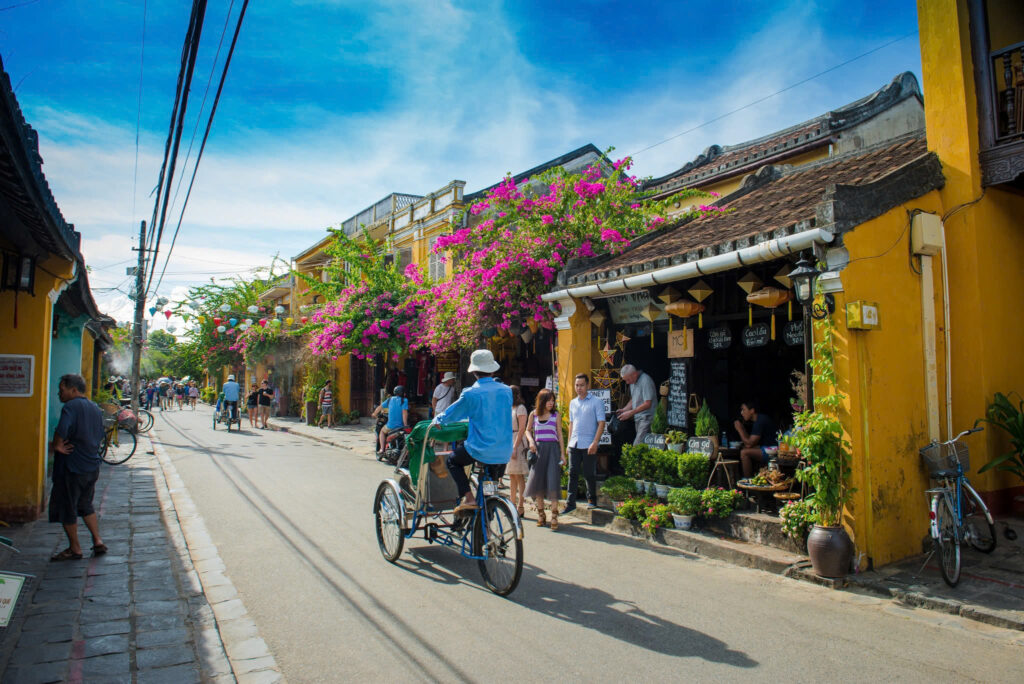
In the afternoon, a gentle boat ride brings you back into Hoi An. The rest of the day is yours. Wander the lantern-lit streets, find a tailor, sit by the river.
If you can manage an early start the next morning, set an alarm for 5.30am. The Ancient Town between 5.30 and 8.30, before the day tourists arrive, looks and feels completely different. The light is softer, the streets are quieter, and for photographers it’s the best window of the entire trip.
Day 5: Hoi An, Fly to Hanoi
A relaxed morning before the flight. Visit the Ancient Town, find a tailor if you haven’t already, or take a taxi to Cua Dai Beach for a couple of hours before heading to Da Nang airport.
The short flight to Hanoi lands you in a city that immediately signals a different country. Cooler, more formal, older. The capital carries its history more visibly than the South.

Day 6: Hanoi, Culture & History
Hanoi repays a slow day. The city’s history is layered across a relatively compact area, and most of it is best seen on foot or by cyclo.
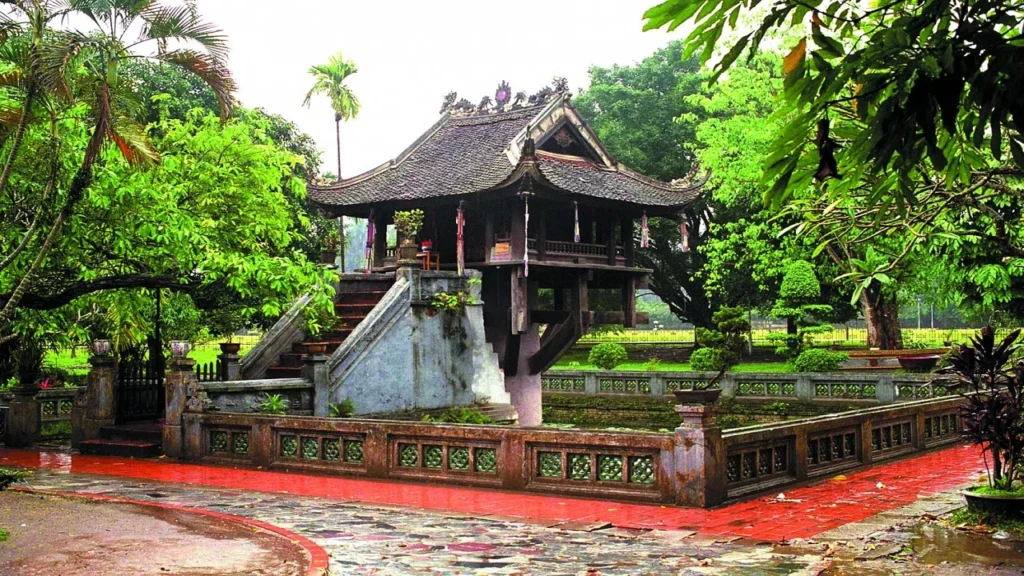
The morning covers the Northern bank of the city: Ho Chi Minh Mausoleum and his nearby stilt house, a deliberately simple structure that says a great deal about the man, then the elegant One Pillar Pagoda and the Temple of Literature, Vietnam’s first university, founded in 1070.
After lunch, the tone shifts: Hoa Lo Prison (the “Hanoi Hilton”) offers a frank look at both French colonial rule and the American War through personal stories and preserved cells. Nearby, the Vietnam Women’s Museum gives context that most Vietnam itineraries miss entirely.
The day ends with a cyclo ride through the Old Quarter, a more immersive way to take in the maze of streets than walking, followed by a water puppet show, a performance tradition that dates back over a thousand years and is unlike anything else in Southeast Asia.
Day 7: Ninh Binh, Halong Bay on Land
An hour’s drive South of Hanoi, Ninh Binh looks like Ha Long Bay moved inland: the same dramatic limestone karsts, but rising from rice paddies instead of water. On a clear morning, it’s one of the most photogenic landscapes in Vietnam.
The day starts on the water: a sampan boat ride through Tam Coc, rowed by locals using their feet while you drift past mossy cliffs and through cave passages in the rock. After lunch, the mode of transport switches: cycling through quiet country lanes to Thai Vi Temple, tucked among fields beneath limestone cliffs, and then up the stone steps of Bich Dong Pagoda, built into a cave with views over the countryside from the top.
Late afternoon, return to Hanoi for the night.
Day 8–9: Lan Ha Bay Overnight Cruise
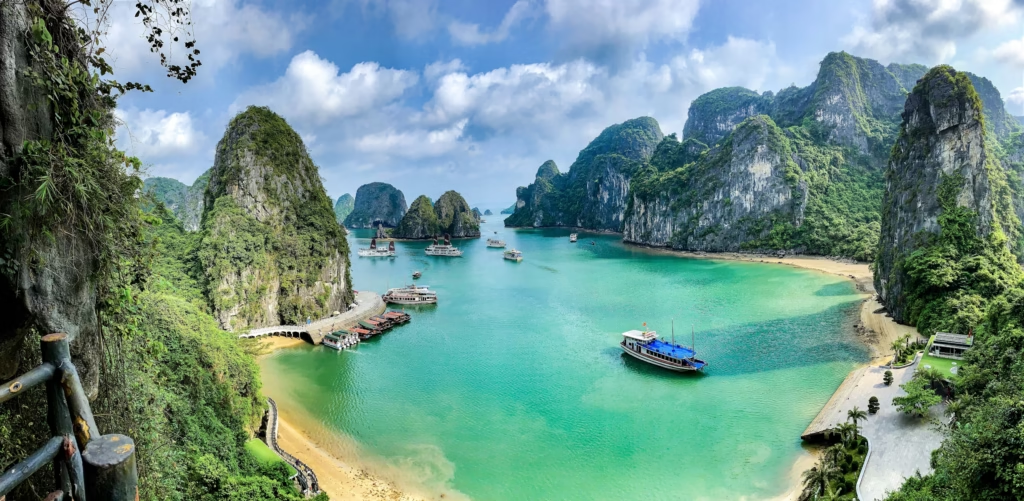
The drive to Halong City takes most of the morning. Board your boutique cruise ship at the harbour and sail into Lan Ha Bay, the quieter, less-touristed extension of Ha Long Bay, with the same limestone karsts and emerald water but without the flotilla of large boats.
Day 8 afternoon: a cycling excursion to Viet Hai Village on Cat Ba Island, a small community inside the national park reachable only by boat or forest trail. Rice fields, fish ponds, stilted houses. It’s a long way from the city in every sense. Back on board, the ship’s chef leads a Vietnamese cooking class on deck before dinner under the stars.
Day 9 morning: tai chi on the sundeck at sunrise, then a kayak excursion to Dark & Bright Cave, a hidden grotto of still water and towering rock walls that rewards the early start. Full breakfast as the ship heads back to harbour, then a shared transfer to Hanoi for the final night.

Day 10: Hanoi, Depart
A gentle final morning, pace depending on your flight. The Old Quarter is worth one last walk: coffee at a street stall, a bowl of pho, a few minutes by Hoan Kiem Lake before the car comes.
Your guide and driver will see you to Noi Bai International Airport for departure.
This is the exact route of our Glimpse of Vietnam — 10-Day Private Tour. Private guide, superior hotels throughout, all transfers and domestic flights included. Everything is handled: transfers, hotels, flights, day trips, restaurant bookings. You just show up and experience Vietnam.
Should You Start in North or South Vietnam??
The itinerary above runs South to North (Ho Chi Minh City in, Hanoi out). This direction works well for most first-timers: the South eases you in with warmer weather and a more international feel, and the trip builds naturally toward Hanoi’s older, more layered character.
North to South works equally well, and has its advantages: international flights into Hanoi are often cheaper or better-routed from Europe and North America, and some travelers prefer to start with the capital and move gradually toward the warmer South.
Both directions cover the same highlights. The choice usually comes down to flight availability and which airport gives you the better deal.
Read the full guide: North vs South Vietnam: Where to start your 10-day Vietnam Tour?
What You’ll Actually See and Do in 10 Days in Vietnam
Ten days is not enough to see all of Vietnam. It is enough to see the parts that will stay with you.
Ho Chi Minh City hits you first. Faster, louder, and more international than you might expect. The history is everywhere once you start looking: colonial architecture, war sites, a city that has been through extraordinary things and kept moving.
The Mekong Delta slows everything down. Palm canals, village workshops, a sampan ride through backwater channels. A side of Vietnam that most visitors miss entirely.
Hoi An is the slow travel highlight of the trip. The Ancient Town is genuinely preserved, the food is some of the best in the country, and the cycling day through riverside villages shows you the region beyond the tourist centre.
Hanoi carries more history per square kilometre than almost anywhere in Southeast Asia. Temples, prisons, pagodas, the Old Quarter’s tangle of streets. Two days here barely scratches it.
Ninh Binh is the surprise for most first-timers. Few people have it on their radar before the trip; most say it was one of the highlights afterward.
Lan Ha Bay is where the pace drops completely. One night on the water, karsts in every direction, no agenda beyond the bay itself.
Ten days won’t show you everything. But it will show you enough to understand why people come back.
Want the full picture of what each day looks and feels like? See What to Expect on a 10-Day Vietnam Tour (First-Timer Guide)
Our Related Experience
Ten days across Vietnam’s South, centre, and North. Ho Chi Minh City’s energy, Hoi An’s charm, Hanoi’s depth, Ninh Binh’s silence, and a night on the water at Lan Ha Bay. Move at your own pace with a private guide, an exclusive vehicle, and the freedom to explore every evening. Your perfect Vietnamese journey starts here. Explore the full Glimpse of Vietnam itinerary today and let us customize it from your very first stop.
Glimpse of Vietnam
10-day journey start from Ho Chi Minh, to the North through the Mekong Delta, Central Heritage towns, and iconic Northern landscapes.
How Much Does a 10-Day Vietnam Trip Cost?
Vietnam is one of Southeast Asia’s best-value destinations, but costs vary significantly depending on how you travel.
| Travel style | Estimated cost (10 days, excluding flights) |
| Budget / backpacker | $500 – $800 |
| Mid-range independent | $1,000 – $1,500 |
| Private guided tour (superior hotels) | $1,500 – $2,500 |
| Deluxe private tour | $2,500 – $3,500+ |
International flights add roughly $600–1,200 depending on where you’re flying from and when you book. Domestic flights within Vietnam are typically $30–80 per leg booked in advance.
The figures above cover accommodation, meals, transport, entrance fees, and activities. A private guided tour includes more than people often expect: a dedicated English-speaking guide throughout, all transfers and domestic flights, hotel bookings, and full logistical support on the ground.
Want the full cost breakdown – what’s included, what’s not, and how it compares to booking independently? How Much Does a 10-Day Vietnam Tour Cost? (2026 Breakdown)
Is 10 Days in Vietnam Too Rushed?
The itinerary above was built to avoid the most common mistake on 10-day Vietnam trips: too many places, not enough time in any of them. The pace shifts noticeably between regions, busier in the South, slower through the centre, measured in the North.
Specifically worried about pace? See Is 10 days in Vietnam enough to find your suitable pace
Most first-time travelers find it sits on the right side of the line. But the full answer depends on your travel style, how you handle moving between cities, how much downtime you need, and which parts of the trip matter most to you.
If you have more time and want to add a few more days to relax on Phu Quoc Island, check out our Vietnam 2-Week Itinerary to see if it suits your style.
Ready to Plan Your 10-Day Vietnam Trip?
The 10-day Vietnam Itinerary in this guide is the exact route of our Glimpse of Vietnam private tour, from Ho Chi Minh City to Hanoi, with a dedicated English-speaking guide, superior hotels throughout, all domestic flights and transfers included.
It’s designed for first-time visitors who want to see Vietnam properly, at a pace that leaves room to actually experience the places, not just pass through them.
Have a question before you decide? Our team is based in Vietnam and typically replies within a few hours. Send us a message now.
FAQ
Yes, not to see everything, but to see the right things. A well-structured 10-day itinerary covers all three of Vietnam’s main regions: the South, the central coast, and the North. You’ll leave with a genuine sense of the country, not just a list of sites visited. Most first-time visitors from the US, UK, and Australia find 10 days to be a complete trip, many come back to go deeper.
Yes, but you’ll need domestic flights between regions. Two short flights, one between the South and Central Vietnam, one between the central coast and Hanoi, keep the itinerary moving without burning a full day on the road. Both flights are under 90 minutes and relatively inexpensive booked in advance.
It depends on your passport. Citizens of the US, UK, Australia, Canada, and most EU countries can apply for a 90-day e-visa online. The fee is $25 and processing takes around 3 business days. Some nationalities receive visa-free entry for up to 45 days, check the official Vietnam Immigration portal before booking.
Both are viable. Independent travel gives you more flexibility and costs less. A private guided tour makes sense if you want to use your time well, no logistics to figure out, a local guide who knows the context behind what you’re seeing, and the kind of access to villages and local experiences that’s harder to arrange on your own. For a first visit, the difference in what you actually experience can be significant.
January to March is the most reliable window for a full South-to-North trip, dry and clear across all three regions. October to December is also good. Avoid September and October if you’re spending time in central Vietnam (Hoi An, Da Nang), this is typhoon season on the central coast. The South is dry from November through April.