




Your cart is empty Continue Shopping

Is 2 Weeks Enough for Vietnam? Find your Suitable Itinerary
Yes, two weeks is enough for a first visit to Vietnam. That’s the short answer.
Fourteen days lets you travel the country from North to South without cramming everything into one region or skipping the other. But “enough” doesn’t mean “everything”. Here’s exactly what a two-week trip covers, what it leaves out, and how to tell if 14 days is the right length for your trip.
What a Vietnam itinerary 2 weeks Actually Covers
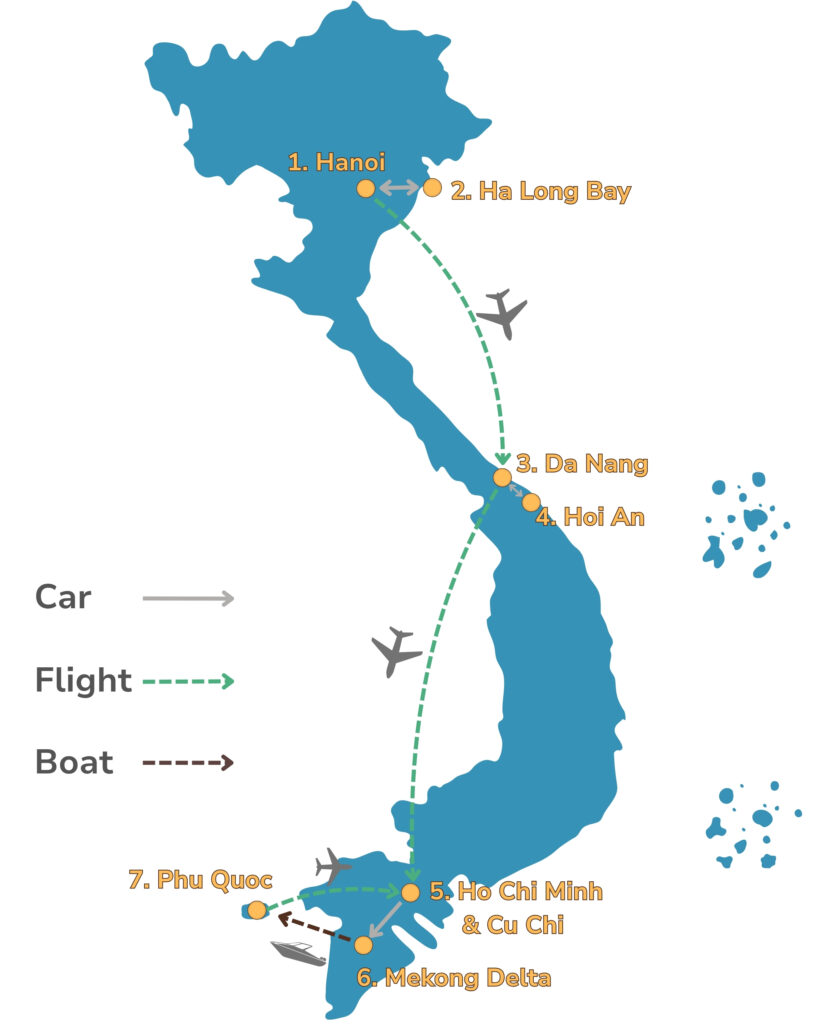
A 14 days in Vietnam Itinerary covers the country’s full north-to-south span: Hanoi, Lan Ha Bay, Hoi An, Ho Chi Minh City, the Mekong Delta, and Phu Quoc.
These stops aren’t filler. They’re the places most first-time visitors come to Vietnam for in the first place, the same way a first trip to France usually includes the Eiffel Tower. You won’t feel like you’re missing “the real Vietnam” by seeing them. You’re seeing the places that define it.
Want a quick look at a complete 14-day Vietnam itinerary? Check out our post “Vietnam 2-week itinerary”.
What sets a Vietnam private 14-day trip apart isn’t the route itself. It’s how it runs. Every hotel, boat, guide, and transfer is booked ahead of time, so there’s no scrambling for tickets or comparing tour operators once you land. A travel consultant stays with you throughout the trip, confirming each day’s plan and handling any changes on the spot. You get the well-known highlights of Vietnam, without the logistics of piecing them together yourself.
Is the Pace Comfortable for 14 Days?
Yes, a well-built 14-day Vietnam itinerary is genuinely relaxed, not rushed. This isn’t a subjective claim. On a leisurely-paced private tour, road transfers are capped at around 2.5 hours, and the longer distances (Hanoi to Da Nang, Da Nang to Ho Chi Minh City, Ho Chi Minh City to Phu Quoc) are covered by short domestic flights instead of full-day drives.
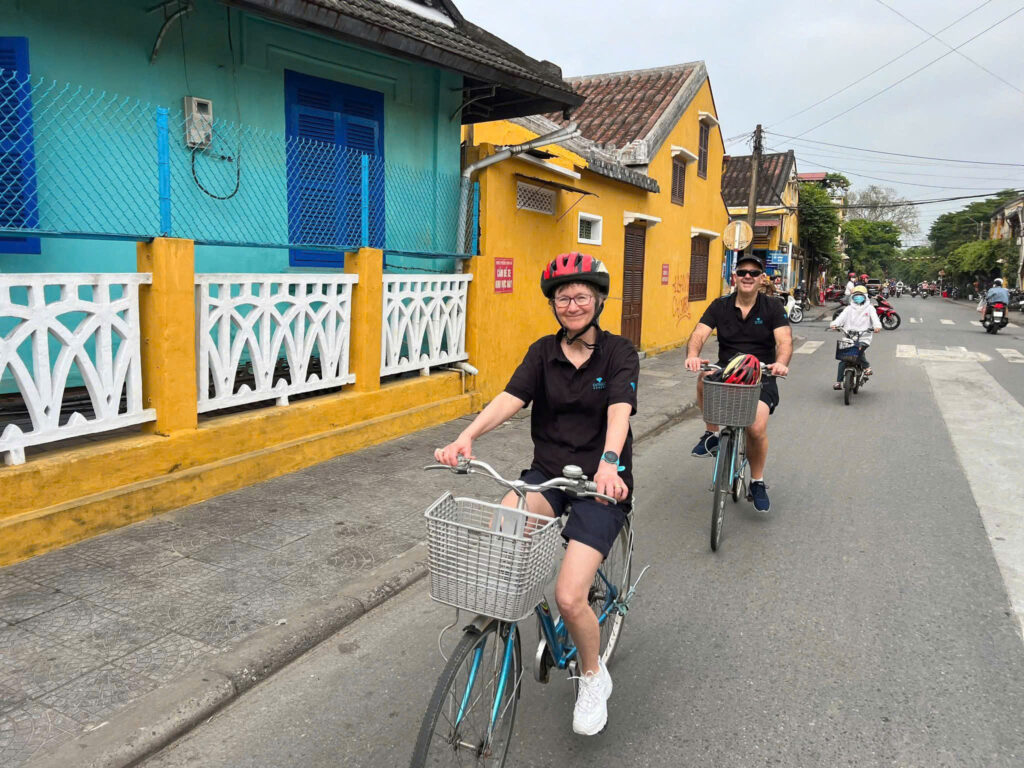
You’re also not switching hotels every night. A typical 14-day route has three nights in Hoi An and three nights in Phu Quoc, with two full leisure days built into Phu Quoc alone. In Hoi An, mornings are free before any planned activity, most hotels lend bikes at no cost, and a lot of travelers use that time to walk the Ancient Town before it gets busy, then cycle out to An Bang Beach. In Phu Quoc, the free days can stay completely unplanned, or you can add an optional island-hopping boat trip with snorkeling if you want one thing to do.
If you’re weighing 10 days against 14, our comparing 10 days vs 2 weeks in Vietnam breakdown covers that in more detail.
What 14 Days Doesn’t Include (And Why That’s Okay)
A 14-day Vietnam trip is built around depth in the North, Center, and South, which means a few well-known spots don’t make the cut, and that’s by design, not by accident.
Sapa and Ha Giang are the two most common ones. Both offer real cultural depth, hill tribe villages and weekly market days included, but they need a dedicated block of days built around long overland transfers. Ha Giang in particular only has homestays or high-end lodges, nothing in between, which suits a younger, more flexible travel style better than a relaxed 14-day trip.

Phong Nha’s cave systems, in Quang Binh province, follow the same logic. They deserve two or three focused days, not a rushed add-on. Con Dao is a different case entirely. It’s quieter and less developed than Phu Quoc, with fewer restaurants and a smaller range of hotels, but it pairs striking scenery with real wartime history, and if your trip lands during turtle nesting season, it’s genuinely special.

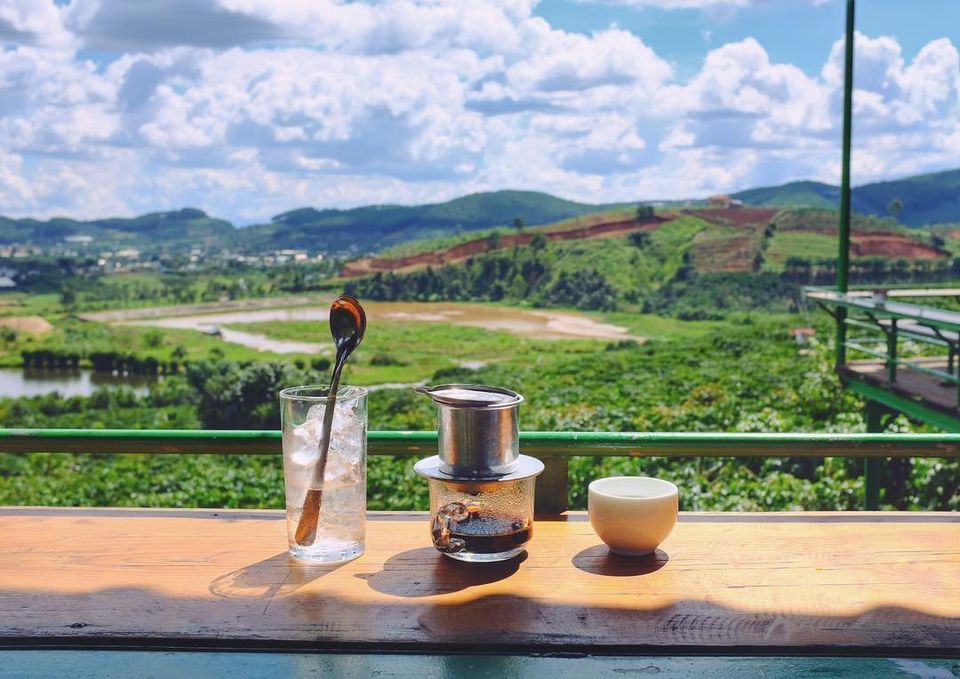
Da Lat is the one exception worth naming directly. It’s a popular add-on in a lot of Vietnam itineraries, but for travelers looking for cultural depth, it doesn’t offer as much as Sapa’s hill tribe villages and market culture. It’s built more around resorts and cool-climate scenery, which is why it isn’t part of this route.
None of this means 14 days falls short. It means the itinerary stays focused on a route that works well together, rather than trying to stretch across every region Vietnam has.
When You Might Want 18-21 Days Instead
Eighteen to twenty-one days makes sense mainly for one reason: adding regions without cutting into the rest of the route.
The most common add-on is Sapa or Ha Giang. Sapa alone needs at least three days and two nights, one night on the overnight train and one at a hotel. For a more relaxed pace, we usually build it as four days and three nights instead, with one night on the train and two at a hotel. To fit that in without overextending the trip, Ninh Binh gets dropped and the route goes straight to Ha Long Bay.
At 21 days, you can go further and build what’s essentially a complete Vietnam trip: Sapa in the north, Phong Nha’s caves in Quang Binh, and Hue’s imperial history added alongside the original route. It’s the version for travelers who want as much of the country as possible in one trip, not just the highlights.
The other reason to go longer is travel style, not geography. If you’re the type who’d rather spend four or five unhurried days in one place, coffee in the morning, no fixed plan, than keep moving every few days, the extra days give you room to do that without feeling like you’re missing the main route.
For most first-time visitors, though, 14 days covers what matters most without needing either of these adjustments.

So, Is 2 Weeks in Vietnam Enough for You?
For most first-time visitors, yes. Fourteen days covers Hanoi, Lan Ha Bay, Hoi An, Ho Chi Minh City, the Mekong Delta, and Phu Quoc at a comfortable, unhurried pace, without needing to choose between the north and south.
If you’d rather trade beach time for something quieter, Con Dao can replace Phu Quoc. If you want the hill tribe villages and market culture of the north, Sapa can be added, usually by extending to 18-21 days. Neither choice makes 14 days the “wrong” length. It just depends on what you want more of.
The route above is one version of what works. If you want it adjusted around your own interests, contact us and we’ll build it around what actually matters to you, not a fixed template.
Have a question before you decide? Our team typically replies within a few hours.