

Vietnam 2-Week Itinerary: Classic North to South Route
Most Vietnam itineraries pack you into a new hotel every other night. You unpack, sightsee, repack, move on. By the end of two weeks in Vietnam, half your energy has gone into logistics instead of the country itself.
This itinerary works differently. It runs North to South, from Hanoi to Phu Quoc, but it’s built around staying put. Most stops get three nights or more, so you actually get to know a place before moving to the next one.
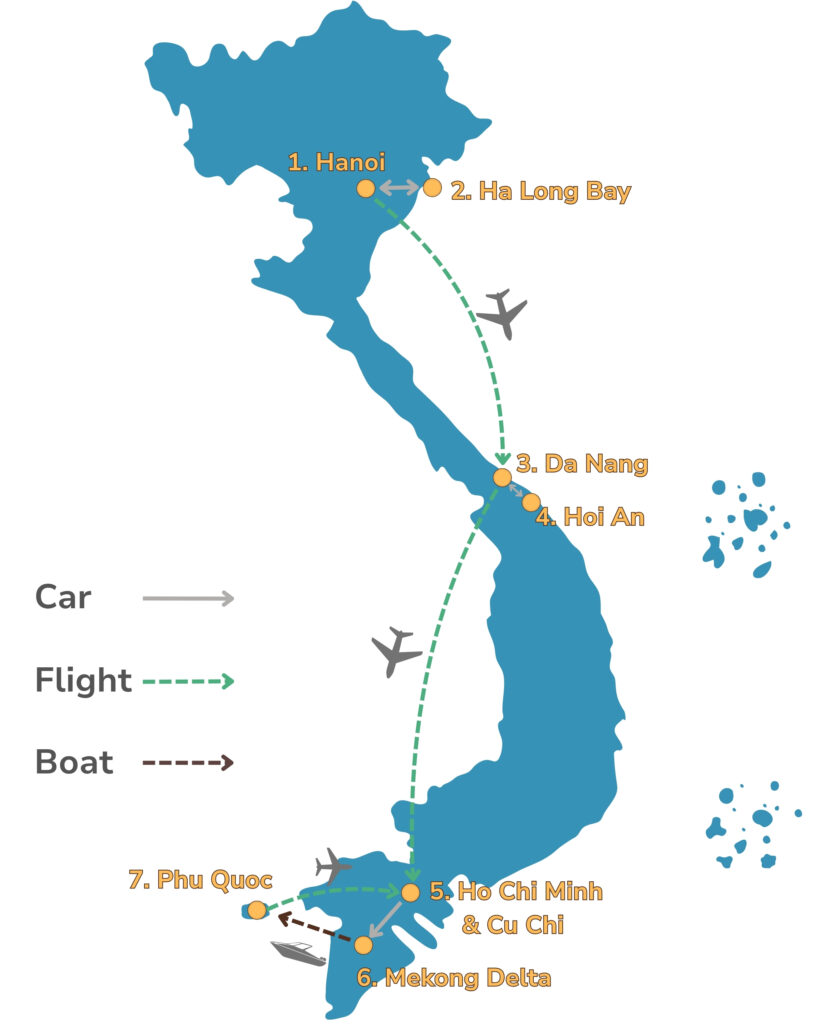
Here’s our Vietnam 2-week itinerary route: Hanoi, Halong – Lan Ha Bay, Hoi An, Ho Chi Minh City, the Mekong Delta, and Phu Quoc to close out the trip. Below is the full breakdown, stop by stop, plus why this particular combination works well for two weeks.
Why 2 Weeks in Vietnam Is the Sweet Spot
Ten days in Vietnam covers the essentials well, the pace stays easy, but the itinerary itself is tighter. You move through Hanoi, Hoi An, Ho Chi Minh City, and Halong Bay, and there’s not much slack built in for anything beyond the core route.
A 14 days in Vietnam itinerary gives the same essentials with more room to breathe. The extra four days mostly show up at the end of the trip, as two free and easy days in Phu Quoc, no temples, no transfers, just the beach as a close to the journey.
That two-week stretch also leaves room to choose. If lying on a beach for two days isn’t your idea of a finale, you can swap Phu Quoc for a side trip to Ninh Binh, or extend into Hue and Phong Nha instead. The extra time isn’t just “more sightseeing” it’s flexibility to shape the back half of the trip around what you actually want.
If you’re still deciding between 10 and 14 days, this breakdown of whether 10 days is enough for Vietnam goes into that comparison directly.
The 2-Week Vietnam Itinerary Route at a Glance
Here’s the shape of the trip: Hanoi, Lan Ha Bay, Hoi An, Ho Chi Minh City, the Mekong Delta, and Phu Quoc, finishing with a final night back in Ho Chi Minh City before your flight home.
| Stop | Nights | Highlight |
|---|---|---|
| Hanoi | 2 | Old Quarter, Temple of Literature, water puppet show |
| Lan Ha Bay | 1 (overnight cruise) | Cat Ba cycling, kayaking, quiet karst scenery |
| Hoi An | 3 | Ancient Town, countryside cycling, lantern-lit evenings |
| Ho Chi Minh City | 2 | Cu Chi Tunnels, war history, city sights |
| Mekong Delta (Can Tho) | 1 | Canal cruise, floating market the next morning |
| Phu Quoc | 3 | Beach days, island life, free and easy |
| Ho Chi Minh City | 1 | Final night before departure |
This itinerary starts in Hanoi and works its way south, mainly because international flights into Hanoi are more frequent than into Ho Chi Minh City, so it tends to line up better with how most travelers actually arrive. It’s easy enough to flip the order if your flight works the other way.
One routing detail worth knowing: the overnight stop in the Mekong Delta isn’t in Ho Chi Minh City, it’s in Can Tho. That means you wake up for the Cai Rang floating market already in the right place, then head straight to Phu Quoc without backtracking to Saigon first.
And you’ll notice two names missing from this list: Hue and Halong Bay. That’s not an oversight, it’s a deliberate choice, and the next two sections explain why.
Day-by-Day Overview of Our 2-Week Vietnam Itinerary
Hanoi (2 nights) You’ll start with the Old Quarter, Hoan Kiem Lake, and a deep dive into the city’s history at the Temple of Literature and Ho Chi Minh Mausoleum. The day closes with a cyclo ride through the Old Quarter and a traditional water puppet show (múa rối nước). Pace here is steady but not rushed, enough to settle in before the trip really gets moving.

Lan Ha Bay (1 night, overnight cruise) From Hanoi, you board a cruise into Lan Ha Bay rather than the more crowded Halong Bay proper. The afternoon includes a cycling excursion to Viet Hai Village on Cat Ba Island, and the evening brings a cooking class and dinner on the sundeck under open sky. This is the most slow-paced stretch of the whole trip, built for soaking in scenery rather than checking off sights.

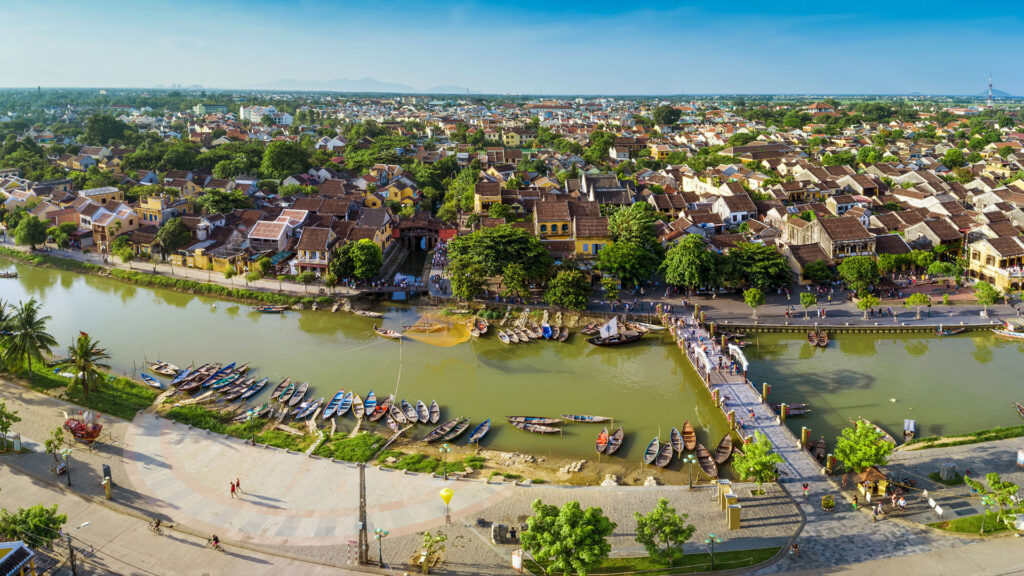
Hoi An (3 nights) After flying south to Da Nang, you head into the countryside around Hoi An for a basket boat ride and a cycling route past rice paddies and small hamlets. The rest of your time is split between a guided walk through Hoi An Ancient Town and a full free day to wander at your own pace. Of every stop on this route, Hoi An gets the most unstructured time, which is by design.
Ho Chi Minh City (2 nights) The pace picks up here. You’ll visit the Cu Chi Tunnels, then spend the afternoon moving through the city’s colonial landmarks: Notre Dame Cathedral, the Central Post Office, Reunification Palace, and the War Remnants Museum. It’s a denser day than most others on this itinerary, balanced by a slower start the next morning before heading into the Mekong.

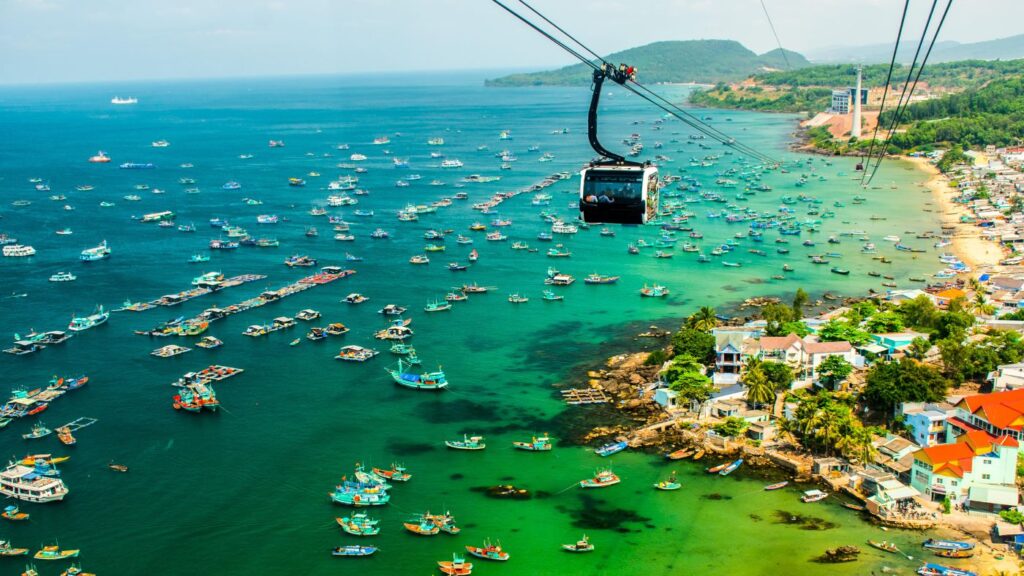
Mekong Delta and Phu Quoc (1 night in Can Tho, 3 nights in Phu Quoc) You’ll cruise the canals around Ben Tre, visit family-run workshops, and overnight in Can Tho so you’re in position for the Cai Rang floating market the next morning. From there, it’s a short speedboat ride to Phu Quoc, where the itinerary deliberately empties out: three nights with nothing scheduled beyond breakfast, just beach, sea breeze, and the option to add a snorkeling trip if you want one.
This is also where the trip lands you back in Ho Chi Minh City for one final night before your flight out, giving you a buffer day rather than a rushed departure straight from the island.

If this relaxed pace sounds like what you’re looking for, reach out to us today to see how this itinerary fits your dates
How to Make the Most of Each Stop
Hanoi: 2 nights Two nights is enough to get a real feel for the Old Quarter without rushing through the Temple of Literature or the mausoleum. If you want to go deeper into how to spend your time here, this guide on how many days in Hanoi breaks it down further.
Lan Ha Bay vs. Halong Bay: why this route skips the main bay Halong Bay has gotten crowded, not just during the day, but at night too, when dozens of cruise boats anchor in the same stretch of water. Lan Ha Bay sits just south of it, same limestone scenery, far fewer boats sharing the view.
The bigger difference shows up in what you actually get to do. Lan Ha Bay includes a cycling stop at Viet Hai Village on Cat Ba Island, something the standard Halong itinerary doesn’t offer. If you have an extra day to spare, a 3-day, 2-night version of this cruise adds trekking on Cat Ba Island as well.

If a slower, less crowded version of Halong Bay sounds like the kind of stop you want on your trip, Get in touch and we’ll talk through the cruise options.
Hoi An: 3 nights This is the longest stop on the itinerary, and that’s deliberate. One day goes to the countryside, basket boats and a cycling route past rice paddies, and another goes to the Ancient Town itself. The third day is left open on purpose, no fixed plan, just time to wander, return to a favorite café, try cao lầu or white rose dumplings (bánh vạc) at a spot your guide recommends, or finish a tailoring order.
For more on how to split your time here, this breakdown of how many days in Hoi An goes further into it.
Ho Chi Minh City and the Mekong: is one day in the city enough? Two nights in Ho Chi Minh City covers the Cu Chi Tunnels and the city’s main colonial landmarks without feeling like a single exhausting day. From there, the trip moves into the Mekong Delta with an overnight in Can Tho rather than a same-day return to the city, which means the next morning’s Cai Rang floating market happens first thing, not after a long drive back.


Phu Quoc: the close of the trip Three nights here with nothing scheduled beyond breakfast. After two weeks of moving through cities, temples, and canals, this is the stretch built purely for slowing down, before one final night back in Ho Chi Minh City ahead of the flight home.

Why This Route Skips Hue
If you’ve looked at other Vietnam itineraries, you’ve probably noticed Hue shows up on almost all of them. This one leaves it out, and that’s worth explaining rather than glossing over.
This itinerary is built for travelers who’d rather move less and settle in more. Adding Hue means another flight or transfer, another hotel check-in, another day split between travel and sightseeing instead of just sightseeing.
For a Vietnam travel itinerary 2 weeks, that trade-off shows up directly in how much time you get elsewhere, and this route puts that time into Hoi An instead, where the pace is slower and there’s room to actually enjoy a place rather than pass through it.
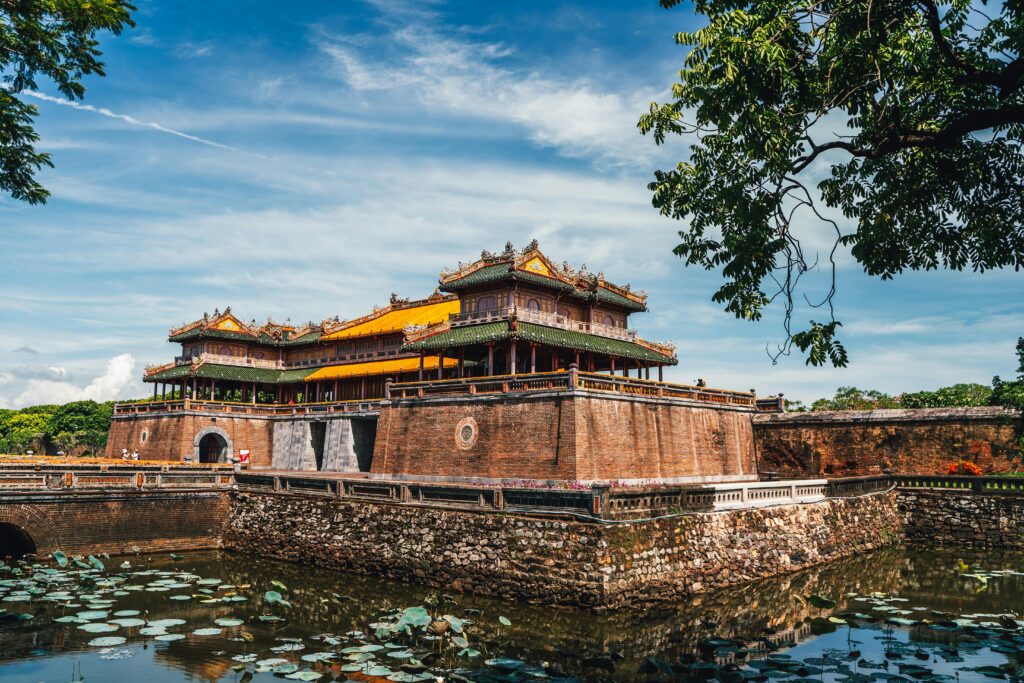
That doesn’t mean Hue is off the table. If the Imperial City and the royal tombs matter to you, the itinerary can be adjusted to add a night there. It’s a straightforward customization, not a different trip.
Best Time to Travel This Route
Because this itinerary moves through three regions with different climates, there’s no single “best month” but October to April works well for most of the route. The north (Hanoi, Lan Ha Bay) is coolest and driest from November to February. Hoi An’s dry season runs roughly February through August. The south (Ho Chi Minh City, Mekong Delta, Phu Quoc) stays warm year-round, with December to April being the driest stretch, which also lines up nicely with beach days on Phu Quoc at the end of the trip.
If you’re traveling outside this window, it doesn’t rule out the route, it just means packing for the chance of rain in one region or another. For a fuller picture of Vietnam’s weather by month, our complete first-timer’s Vietnam Travel Guide covers it in more detail.
Traveling This Route as a Private Vietnam Tour
The itinerary above is designed around staying in each place long enough to actually feel it, not just pass through. That only works if the schedule bends around you, not the other way around.
On a private tour, the Hoi An free day is genuinely free. The Cai Rang floating market in Can Tho happens at your pace, not at the pace of a group of twelve. If you want to linger over breakfast before the Cu Chi Tunnels, you can. If you want to skip a stop and spend more time somewhere else, your guide will make it work.
At Ginkgo Voyage, every guided Vietnam tour on this route runs privately with a named local guide, not a different staff member each day. The same person who meets you in Hanoi is the one who knows by day three that you prefer a slower morning start and a longer lunch. That kind of continuity is hard to replicate on a group tour.


This itinerary is also fully customizable. The route above is the version most of our travelers end up with, but if you want to add a night in Hue, swap Phu Quoc for Con Dao, or extend the time on Lan Ha Bay, those are all straightforward adjustments.
Take a look at the full Essence of Vietnam itinerary, or get in touch and we can talk through how to shape it around your travel dates and preferences.
Ready to Plan Your Vietnam 2-Week Itinerary?
This itinerary covers the full length of Vietnam, from Hanoi’s Old Quarter to Phu Quoc’s beaches, at a pace that leaves room to actually enjoy each stop rather than just pass through it. Most travelers who do this route tell us the three nights in Hoi An and the free days in Phu Quoc were the parts they hadn’t expected to love as much as they did.
If the route above feels close to what you’re looking for, our Essence of Vietnam has the full itinerary, hotel options across three budget levels, and everything that’s included. If you want to adjust something, add a stop, or just ask a question before committing to anything, get in touch and one of our local team will get back to you.
Frequently Asked Questions
Two weeks covers Vietnam’s main highlights comfortably without feeling rushed. You’ll get time in the north (Hanoi, Lan Ha Bay), the center (Hoi An), and the south (Ho Chi Minh City, Mekong Delta, Phu Quoc), with enough nights in each place to actually settle in. If you’re comparing two weeks against ten days in Vietnam, this breakdown goes into the difference in more detail.
Starting in Hanoi and finishing in the south tends to work better for most Western travelers, mainly because international connections into Hanoi are more frequent. It also means the trip builds naturally toward a beach close in Phu Quoc rather than ending in a busy city. That said, if your flights work the other way, the itinerary can run south to north without any issues. This article on choosing your starting point walks through the options.
For travelers who want quieter scenery and more varied activities, Lan Ha Bay is the stronger choice. Halong Bay gets busy, both during the day and at night when cruise boats anchor close together. Lan Ha Bay has the same limestone karsts with significantly fewer boats, plus a cycling stop at Viet Hai Village on Cat Ba Island that the standard Halong itinerary doesn’t include.
Hue is worth visiting, but adding it means another transit day and one less night somewhere else. This itinerary trades that transit time for more time in Hoi An, which suits travelers who’d rather stay in fewer places longer. If the Imperial City and royal tombs are a priority for you, Hue can be added as a one-night extension.
October to April works well for most of the route. November to February is the coolest and driest period in the north. Hoi An is driest from February through August. The south, including Phu Quoc, is at its best from December to April. For a full month-by-month breakdown, our Vietnam travel guide covers the regional differences in detail.